
For the Last 10 Years, Some Christians Have Told Me to Kill Myself
What I’ve learned about criticism, imperfect action, and helping people anyway.

The first time strangers on the internet told me to kill myself came after a blog post about millennials leaving the church unexpectedly went viral.
Up until that moment, the internet had mostly been a place where I shared hopeful reflections about faith and trying to live a meaningful life. My writing lived quietly in a small corner of the internet with people who generally understood where I was coming from.
But when that post spread beyond my normal readers, something shifted.
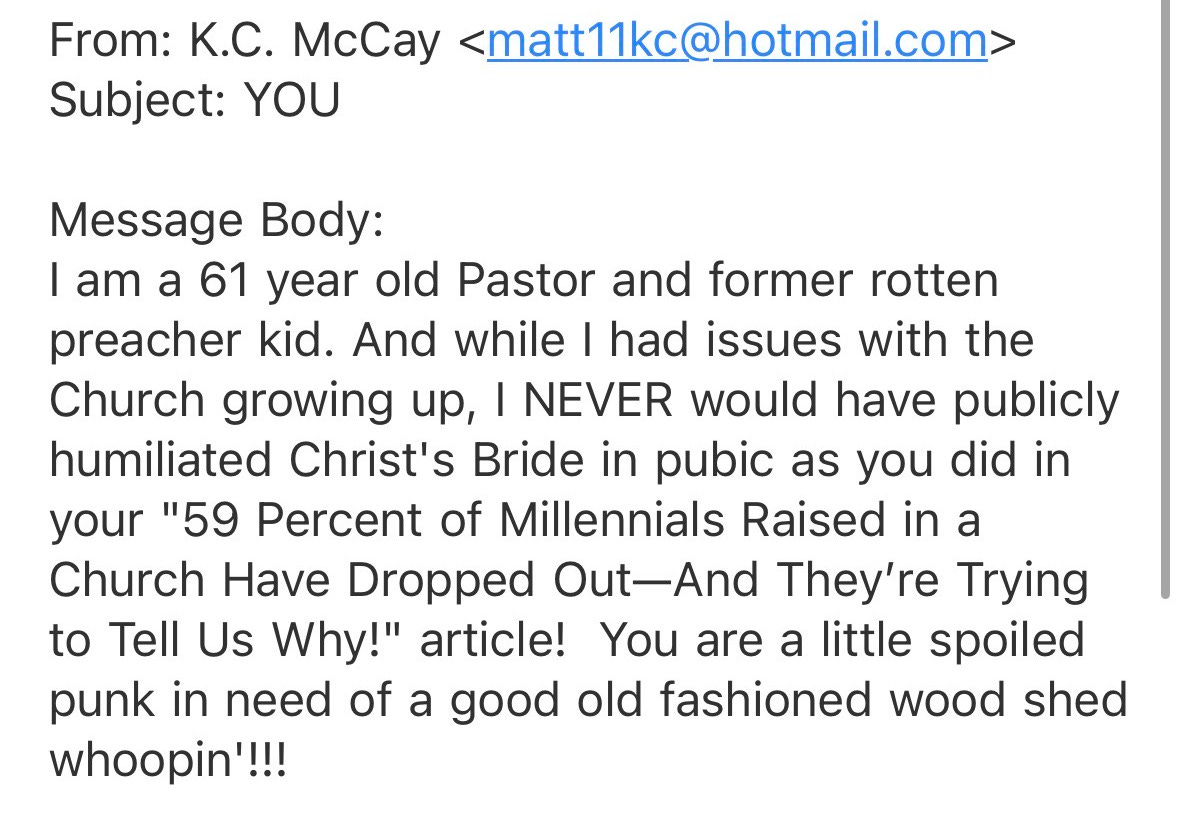
I bet he’s fun at parties. Sigh. There’s no hate like Christian love.
Now, multiply that by hundreds of comments and emails. There were many more encouraging and beautiful comments, but our brains love to hear the negative louder, don’t they?
As a twenty-something regular church attender, I hadn’t seen that side of humanity since getting bullied on the bus in high school. And once they started finding my website, they grew even more vile: “I hope God tells you to kill yourself.”
What I couldn’t reconcile, and still struggle to, is how a majority of the worst comments are from those who claim to follow the same Jesus whose life was defined by compassion. How did a man whose loudest message was “what you do for the least of these, you do for me” become the name attached to messages telling someone to kill themselves?
If you think that kind of message was a one-time fluke from a viral blog post, I wish that were true. It never stopped and intensified on Instagram.
I share some of these messages — and what they taught me — in my second book, Healing Out Loud.
At first, I thought the hate was just the cost of saying something honest on the internet. But eventually I realized the criticism didn’t stay online.
It followed me into real rooms, real conversations, and real opportunities to help people.
Someone Will Always Decide You’re Doing It Wrong
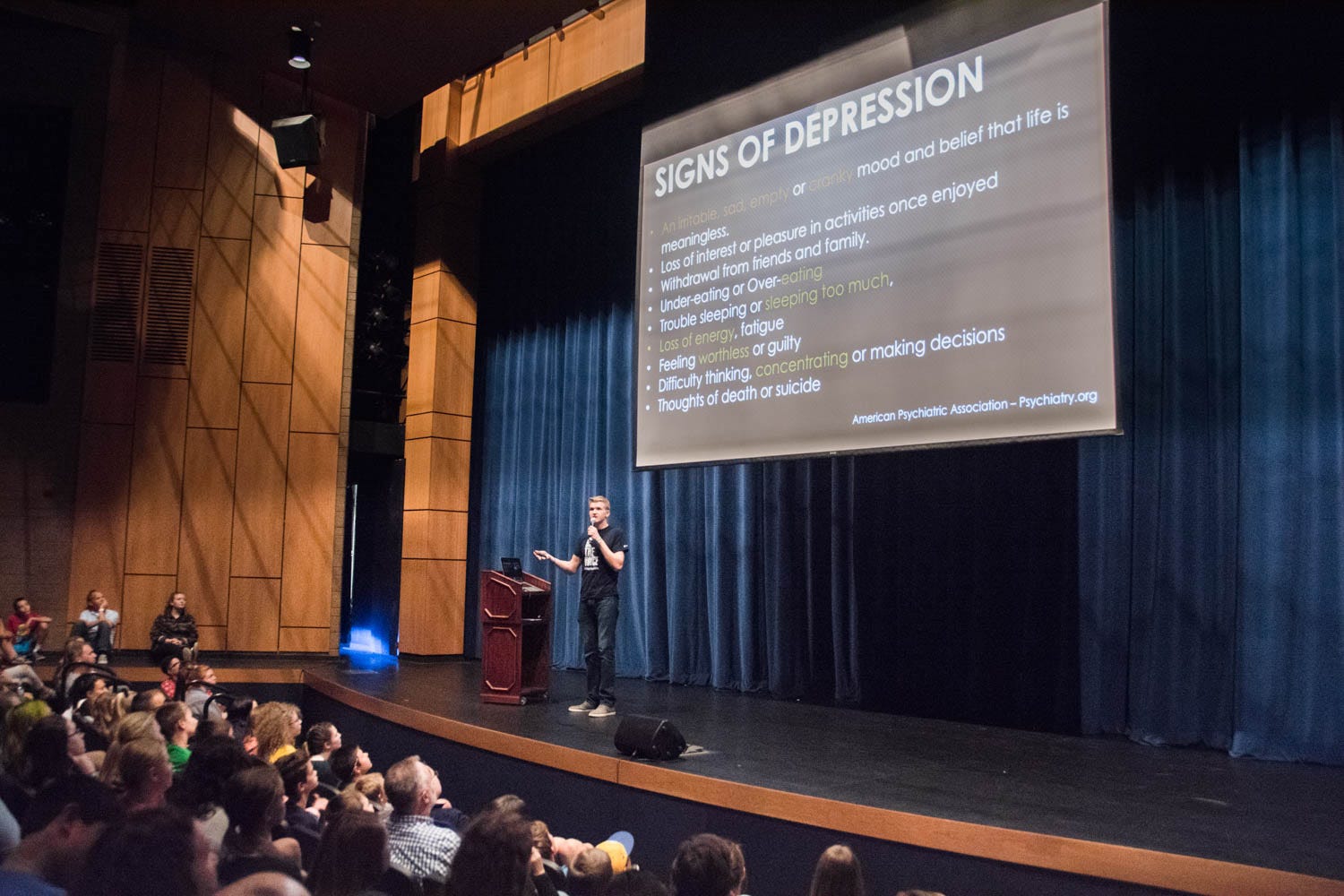
Years ago, I hopped on a Zoom call with the vice president of the National Christian Teachers Association. I had been invited to give my suicide prevention talk at their national convention.
After a few minutes of small talk, he asked one question about my work. Then he leaned forward and said, “Do you hold a biblical view of sexuality?”
My eyes widened. Excuse me… what?

“Well,” he continued, “I noticed you list The Trevor Project as a resource on your website. I just don’t understand why you would point people to an organization like that. They encourage more suicides.”
I froze for a moment, unsure which direction to take the conversation.
“Oh,” I said carefully. “Well, unfortunately, there isn’t a Christian suicide prevention organization like that. Believe me, I’ve looked. And I list them alongside about twenty other resources.”
We went back and forth for a while. The conversation felt less like curiosity and more like an interrogation. At one point, I realized I was no longer deciding how to answer his questions. I was deciding whether I even wanted to speak at this conference anymore.
Finally, I said, “Well, I happen to see God’s love like a big bear hug. I think He wants everyone inside His arms. And I think He would want us to help teenagers choose to stay alive, however we can. God gave me the mission to help fight suicide. I’ll let other people fight the other battles.”
By then, I could feel anger rising in my chest. He paused.
“Well,” he said, “we’ll have to pray about whether you’re right for this conference.”
The call ended. I never heard from them again.
Imperfect Action
For a while, I assumed those moments meant I had done something wrong. Maybe I had said the wrong thing. Maybe I had stepped into conversations that were too complicated. Maybe I had made mistakes.
But over time, I began to see something more clearly.
Trying to help people in the real world is rarely neat. It’s messy and complicated, and no matter how carefully you approach it, someone will eventually decide you’re doing it wrong.
The irony in all of this. isn’t lost on me. Jesus didn’t spend much time criticizing people who were trying and getting it wrong. But he had very strong words for people who saw suffering and chose to do nothing.
Think about the Good Samaritan. A man beaten and left on the side of the road while religious leaders passed by. The hero of the story wasn’t the person with perfect theology. It was the person who stopped and helped.
Or the moment Jesus said, “Whatever you did for the least of these, you did for me.” Again and again, the message was simple: see people, love people, help people. All people.
Yet our world often flips that upside down. We rush to criticize imperfect action while ignoring those who never step forward to help at all.
Our culture attacks imperfect action while ignoring those who never act at all.
Helping people who are struggling with their mental health sits right in the middle of that tension. Real people don’t arrive with tidy answers or perfect categories. Sometimes they’re just someone trying to survive another day.
When you step into work like that, perfection disappears quickly. All that’s left is imperfect action — showing up, trying to help, and doing the best you can with the compassion you carry.
Keep Going Anyway
For the last ten years, strangers on the internet have occasionally told me to kill myself. And for the last ten years, I’ve kept trying to help people anyway.
I know it can be scary to try. To step out in front of the crowd and attempt to help, even imperfectly. But remember this: criticism almost always finds the people who are trying.
So if you’re out there doing your best to spread hope and help people who are hurting, keep going.
The world needs more imperfect action.
If this essay resonated with you, consider subscribing.
Every week, I share reflections on mental health, resilience, and the messy, beautiful work of becoming more fully and recklessly alive.
Sam you are literally doing God's work. Whenever I see the acronym WWJD , I think of you. Pastors and other " religious leaders" are just judgemental humans with an agenda. God forgives, he does not condemn, as he gave his only Son to die for out sins. Never let the ignorance of small minded people stop you in your mission🙏🏻💙
Have pastors never read Elijah, Job, or various Psalms, all of which describe deep struggles with depression and what would now be called suicidal ideation? It's not just an astounding lack of biblical love and grace, it's a lack of biblical literacy they’re displaying.
Thank you for addressing why millennials are leaving churches. It needs to be looked at!